What Are the Hardest Languages to Translate?
Publié le 4 août 2026 · 7 min de lecture
S M Arifuzzaman · Founder, TranslationAtlas
The hardest languages to translate aren't fixed, because difficulty comes from the distance between the source and target, not from any single language being inherently hard. Arabic into English is hard for different reasons than German into Japanese. What makes a pair genuinely difficult is structural distance, missing legal or cultural concepts, and scripts that don't map cleanly onto each other.
Ask ten translators "what's the hardest language" and you'll get ten different answers, because the honest answer is "hardest compared to what." A Finnish native translating into Estonian has an easier week than an English native translating into Finnish. Pair, not language, is the unit that matters, and it's also the unit that drives your quote.

Structural distance is the biggest factor
English and Spanish share a lot of grammar: subject-verb-object order, a similar tense system, cognates everywhere. English and Japanese share almost none of that. Japanese is subject-object-verb, drops pronouns constantly, and marks formality with entirely different verb conjugations depending on who's listening. A translator working English to Japanese isn't just swapping words. They're rebuilding the sentence from the ground up and deciding, sentence by sentence, how polite the speaker should sound.
Korean has the same honorific problem, arguably a harder version of it: the wrong speech level in a business email reads as either stiff or disrespectful, and there's no neutral default to fall back on. These pairs take longer because there's genuine judgment involved on every line, not mechanical substitution. A translator has to know who's speaking to whom, in what setting, before choosing a single verb ending.
Even within European languages, distance varies more than people assume. Icelandic kept a grammar close to Old Norse while its Scandinavian cousins simplified theirs over centuries, so an Icelandic-to-Swedish translator is bridging more structural ground than the shared geography suggests. Distance is measured in grammar and history, not on a map.
Diglossia: when a language has two versions of itself
Arabic is the textbook case of diglossia: the gap between the formal written standard (Modern Standard Arabic) and the spoken dialects (Egyptian, Gulf, Levantine, Maghrebi) is wide enough that a Moroccan and an Iraqi speaker can genuinely struggle to follow spontaneous conversation, while both read the same MSA newspaper without trouble. A translator has to pick a register that matches the document's purpose. Legal and government work goes into MSA, but a marketing campaign meant to sound native and local usually needs a dialect decision the client has to weigh in on. Get it wrong and the copy reads like a government form when it was supposed to sound like a friend giving advice.
Swiss German has a milder version of the same split: the written standard used in official documents differs enough from spoken Swiss dialects that a translator working purely from a recording would produce something a reader flags as odd.
Compound morphology: German and Finnish
German builds new words by gluing existing ones together. A single technical term can run twenty or thirty letters long once several concepts are stacked into one noun. Finnish does something similar through case endings rather than compounding: a single noun can carry fifteen grammatical cases, so "in my house," "from my house," and "into my house" are all one word with a different suffix, not a preposition plus a noun. Machine tools handle this badly because the "word" a program is counting doesn't correspond to the concept a human reader parses. This is part of why translation sounds mechanical when it's done word-by-word rather than concept-by-concept. Compounding and case systems are exactly where literal, mechanical approaches fall apart, and it's a large part of why pricing reflects language pair as one of its core variables.
No shared legal concepts: common law vs. civil law
This one has nothing to do with grammar and everything to do with legal systems. English-speaking countries mostly run on common law; most of continental Europe, Latin America, and much of Asia and Africa run on civil law, with genuinely different underlying concepts. "Trust," "discovery," and "consideration" don't have clean civil-law equivalents, and civil-law terms like the French acte authentique don't map onto a single common-law term either. A translator working a contract between these systems has to choose between a functional equivalent that loses precision or an explanatory gloss that adds length. Neither is free, which is one reason legal pairs across common law and civil law cost more than a same-family pair.
Requirements also vary sharply by receiving country. A document accepted with a plain translator's certification in one country might need a sworn translator's seal, a notary, or an apostille somewhere else. It's worth checking our breakdown of certified translation requirements by country before you assume a translated contract needs the same stamps everywhere it travels.
Scripts and OCR: the document-handling problem nobody mentions
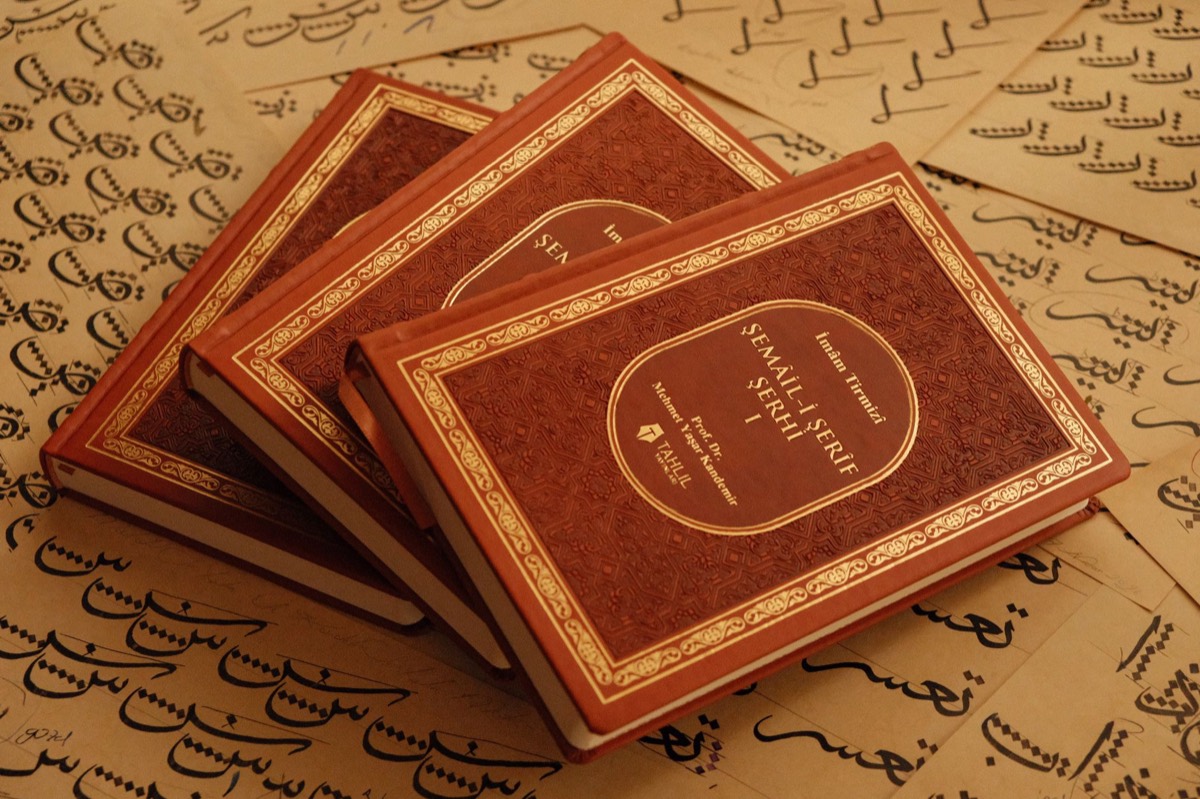
Difficulty isn't only linguistic. It's also physical. A scanned Arabic or Hebrew document reads right-to-left, which trips up layout tools built for left-to-right text. Chinese and Japanese documents mix logographic characters with punctuation conventions that don't have Latin-alphabet equivalents, so automated text extraction (OCR) frequently garbles names, numbers, or stamps on official paperwork.
Our project managers see this constantly on birth certificates and diplomas from these language groups. Someone runs the file through free OCR, gets a mangled output, and asks why the "translation" looks wrong before it's even reached a translator. On documents like these, a human retyping the source from the scan is often faster and more reliable than trying to fix broken OCR output, and it removes a whole category of transcription errors before translation even starts.
Why hard pairs cost more and take longer
All four factors, structural distance, diglossia, morphology, and legal-system gaps, add real time: more research, more judgment calls, sometimes a second linguist to confirm a register or terminology choice. That's reflected honestly in how translation pricing works: rare or structurally distant pairs sit in a higher tier than, say, English to French, and turnaround runs a day or two longer because the translator pool for genuinely hard pairs is smaller. A rush request on a hard pair is the single fastest way to inflate a quote, simply because there are fewer qualified people to pull from the queue.
So which language is "hardest"?
There isn't one. If you're translating into or out of Arabic, Japanese, Korean, Finnish, or German for anything official, expect more nuance in the process, and more value in working with someone who specializes in that pair rather than a generalist. Browse our full list of supported languages to see which pairs we route directly through native specialists, or see how pricing works before you request a quote for a harder pair.
S M Arifuzzaman
Founder, TranslationAtlas
S M Arifuzzaman founded TranslationAtlas and built its certified-translation fulfillment process and professional translator network, which now covers 120+ languages. He oversees quality and turnaround across every order the platform processes.
Articles similaires
How Translators Handle Cultural References and Wordplay
Puns, idioms, and slogans rarely survive a literal translation. The toolbox translators actually use: substitution, adaptation, footnotes, omission.
How Professional Translators Verify Accuracy
Professional translation accuracy comes from a structured TEP process, second-linguist review, termbase checks, and QA software, not just one translator.
How Translators Handle Names and Proper Nouns
Translating names means matching the exact passport spelling on official documents, choosing the right transliteration system, and knowing what stays as-is.
What to Know Before Commissioning a Translation
A practical checklist for commissioning a translation: which files to send, what to state up front, and the questions a good agency will ask you first.