How to Tell If a Translation Is Good Quality
Publicado el 4 de agosto de 2026 · 6 min de lectura
S M Arifuzzaman · Founder, TranslationAtlas
A good translation reads like it was written in the target language to begin with: no leftover source-language word order, no words that are technically accurate but wrong in context, and every number, date, and name matching the original exactly. You don't need to speak both languages to catch most of what's wrong with a bad one.
Maybe an agency handed you a translated contract and something about the phrasing feels off. Maybe you ran a document through a free tool and want a second opinion before you send it anywhere official. Either way, the honest answer is that you can check translation quality pretty effectively without reading the source at all. You just need to know where translators cut corners.
Read it as if the source never existed
Set the original aside and read the translated text on its own terms. Does it sound like something a native speaker of the target language would actually write, or does it sound like English (or French, or German) wearing a costume? Sentences that are grammatically correct but structurally strange (long noun chains where the target language would use a verb, or a string of subordinate clauses stacked the way the source language stacks them) are the clearest tell of a rushed or literal job. A native reader test is the single fastest quality check that exists: hand the finished translation to someone who reads only the target language and ask if anything sounds unnatural. If they hesitate on a sentence, that sentence probably has a syntax problem underneath it.
Register matters just as much as grammar. A birth certificate translated in casual, conversational language is wrong even if every word is accurate, and a marketing brochure translated in stiff legal register will fall flat with readers. Good translation quality means the tone matches the document's actual purpose, not just its individual sentences.
Do a back-translation spot check
You don't need a second full translation to sanity-check one. Pick two or three sentences (ideally ones with some complexity, not just short factual lines) and run them back through a different tool or a bilingual friend, translating from the target language back toward the source. You're not looking for a perfect match; phrasing will shift in both directions. You're looking for whether the core meaning survived. If a sentence about a payment deadline comes back talking about a delivery date, something got mistranslated, and it's worth flagging before the document goes anywhere that matters.
This is a spot check, not a full audit, and it works best on the sections you actually care about: the clause with the dollar figure, the paragraph with the medical dosage, the line that defines who's liable for what.
Confirm every number, date, and name survived intact
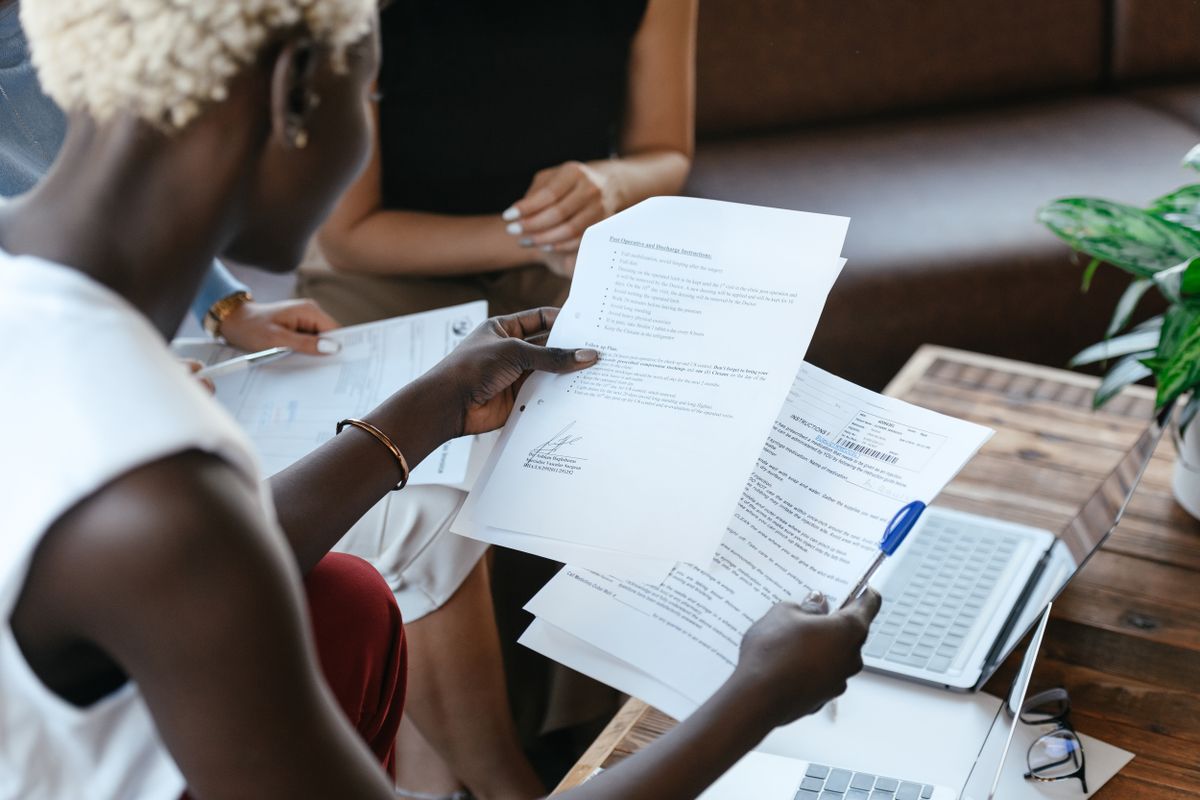
This is the check most readers skip, and it's the one that causes the most real damage. Numbers, dates, and proper names should transfer without any interpretation at all: they're not supposed to be translated so much as copied and reformatted correctly. Go line by line and confirm: does 03/04/2026 mean the same date in both documents (day-month vs. month-day formats trip up more translations than you'd expect), does every amount match, is every name spelled exactly as it appears in the source, including diacritics? A single dropped accent on a name is enough to get an official document rejected by an immigration office or a bank.
If the source document has a table, a stamp, or a handwritten note in the margin, check that it appears somewhere in the translation too, even if it's just a bracketed note like "[illegible stamp]." A translation that quietly drops anything it couldn't read cleanly is not one you should trust with the rest of the document.
Check terminology consistency
If a legal document calls the same party "the Lessor" in paragraph one and "the Owner" in paragraph four, that's not stylistic variety, it's an inconsistency that a contract lawyer will flag immediately. Professional translators build a glossary before they start on anything longer than a page specifically to avoid this. As a reader, you can check for it yourself: pick two or three recurring terms (a job title, a product name, a legal party) and confirm they're rendered the same way every time they appear. Inconsistent terminology is one of the most common signs that a document was translated in pieces, by more than one person, without anyone reconciling the vocabulary at the end.
Watch for the calque and false-friend tells
A calque is a phrase translated word-for-word that no native speaker would actually say: French "tout à fait" rendered as "all to fact" instead of "absolutely," or a German compound noun broken apart clumsily instead of resolved into the phrase English actually uses. False friends are words that look like a cognate but mean something different: Spanish "embarazada" isn't "embarrassed," it's "pregnant," and a translator who doesn't catch the trap produces a sentence that's confidently wrong. Both errors have the same signature: the sentence reads smoothly enough that you might miss it unless you're specifically checking, which is exactly why they're dangerous in official documents. We go into the underlying cause of these tells, and why they show up even in post-edited machine output, in our breakdown of why some translations sound like Google Translate.
What professionals check that you can't
Everything above gets you most of the way, but agencies run checks a reader without the source language simply can't replicate: a second, independent linguist reviewing the translation against the original line by line, QA software that flags any number or tag that doesn't match between source and target, and, for anything going to a court, an embassy, or an academic institution, a formal certification statement that puts a named professional's credibility behind the accuracy of the work. That layer is exactly the gap between "reads fine to me" and "will hold up under institutional scrutiny," and it's worth understanding how machine translation compares to human translation before you decide how much verification a given document actually needs.
If you're not sure, get a second opinion
Some documents are low stakes enough that "reads naturally and the numbers check out" is a good enough bar. Others (visa applications, contracts, medical records) aren't documents you want to gamble on based on a read-through alone. If you're vetting an agency to redo a translation that failed your own checks, our guide on how to choose a translation agency walks through what separates a reliable provider from one that will hand you the same problems again.
If you'd rather skip the guesswork entirely, our certified translation service includes a second-linguist review on every project by default, so the quality checks above are already done before the document reaches you.
S M Arifuzzaman
Founder, TranslationAtlas
S M Arifuzzaman founded TranslationAtlas and built its certified-translation fulfillment process and professional translator network, which now covers 120+ languages. He oversees quality and turnaround across every order the platform processes.
Artículos relacionados
Why Your Translation Sounds Like Google Translate
Stiff phrasing, literal idioms, and uniform sentence rhythm all trace back to the same cause: word-for-word syntax transfer. Here's how to spot it and fix it.
Can You Trust Free Online Translation Tools?
Free online translation works well for casual use but not for official documents. Accuracy varies by language pair, and confidentiality is the bigger risk.
Is Professional Translation Worth Paying For?
Free tools are enough for casual text. Professional translation earns its cost on visa filings, contracts, and marketing, where a redo costs far more.
What Are the Hardest Languages to Translate?
Difficulty isn't about one language. It's about the distance between two: structure, diglossia, honorifics, and legal systems all drive up cost and time.