Translation Quality Standards and Benchmarks
Publicado el 4 de agosto de 2026 · 7 min de lectura
S M Arifuzzaman · Founder, TranslationAtlas
Translation quality standards are formal frameworks: ISO 17100 for the translation process, ISO 18587 for machine-translation post-editing, and MQM error typology for scoring finished text. Together they let you evaluate a translation on something more solid than gut feel. None of them measure a document directly the way a scale measures weight. They measure the process that produced it, or they score the errors that survived it.
If you've ever asked a vendor "is this good quality" and gotten a shrug, or a marketing paragraph about excellence with nothing underneath it, these standards are what a real answer sounds like. They're also what separates agencies that can back up a claim from ones that are just saying the word "quality" louder.

What ISO 17100 actually requires
ISO 17100 is the main process standard for translation services, and it's narrower than most people assume. It doesn't grade the prose. It specifies who is allowed to touch your document and in what order. First, a translator with recognized qualifications: a degree in translation, or an equivalent combination of education and years of professional experience. Then a second, independently qualified linguist who revises the full text against the source, not a spot check but the whole thing, bilingual, line by line.
That second-linguist revision is the part that actually moves the needle on error rates, and it's also the part agencies quietly skip when they're racing on price. A vendor that's genuinely 17100-compliant can tell you who revised your file and what their qualifications were. One that isn't will change the subject or talk about "quality checks" in the vague passive voice.
The standard also covers project management (a defined point of contact, a documented workflow), resource management (translator vetting and record-keeping), and technical resources (terminology and translation-memory tools kept consistent across a project). None of this is glamorous. It's an audit of process discipline, not a taste test of finished prose, and that distinction matters when you're comparing two vendors who both use the word "certified" in their marketing.
ISO 18587: post-editing machine translation
A separate standard, ISO 18587, governs a different job: reviewing and correcting raw machine-translation output rather than translating from scratch. It distinguishes light post-editing, which fixes meaning errors and leaves the phrasing rough, from full post-editing, which corrects meaning and style so the result reads as if a human wrote it from the start (the same target described in why your translation sounds like Google Translate). If a vendor quotes you machine translation plus post-editing, ask which level they mean before you accept the price. Light post-edited text is fine for gisting an internal email and genuinely risky for anything a reader will judge you on.
There's also ASTM F2575, a US standard that frames translation quality as a negotiation between buyer and vendor before work starts rather than a fixed checklist applied after a complaint. It covers target audience, purpose, register, and deadline as agreed specifications, not assumptions. It's less prescriptive than ISO 17100, but it's useful for exactly this reason: it forces the specification conversation to happen up front, when it can still change the outcome.
How error-typology scoring works
Once a translation exists, how do you actually score it? The industry answer is MQM, short for Multidimensional Quality Metrics, an error-typology framework that classifies every mistake found in a sample by category and weights it by severity.
Categories typically include:
- Accuracy: mistranslation, omission, addition, untranslated text left in the source language
- Fluency: grammar, spelling, punctuation, register mismatch
- Terminology: the wrong or inconsistent term for the domain
- Style: phrasing that's technically correct but awkward on the page
Each flagged error also gets a severity weight, minor, major, or critical, and a single critical error (a wrong dosage in a medical translation, a flipped negation in a contract clause) can fail a document even when the rest of it reads beautifully. A vendor with a real QA process can name their error threshold: how many weighted points per thousand words a translation is allowed before it's rejected and reworked, not just delivered with a shrug. Ask, and if a vendor has never heard the term, they probably don't have a scoring system. They have a proofreader and a hope.
Company certification vs. document certification
This is where buyers get confused, and vendors sometimes let them stay confused. ISO 17100 certifies a company's process. An external auditor confirms the workflow described above is actually followed, on an ongoing basis, across projects, and it has nothing to do with any single document you send in.
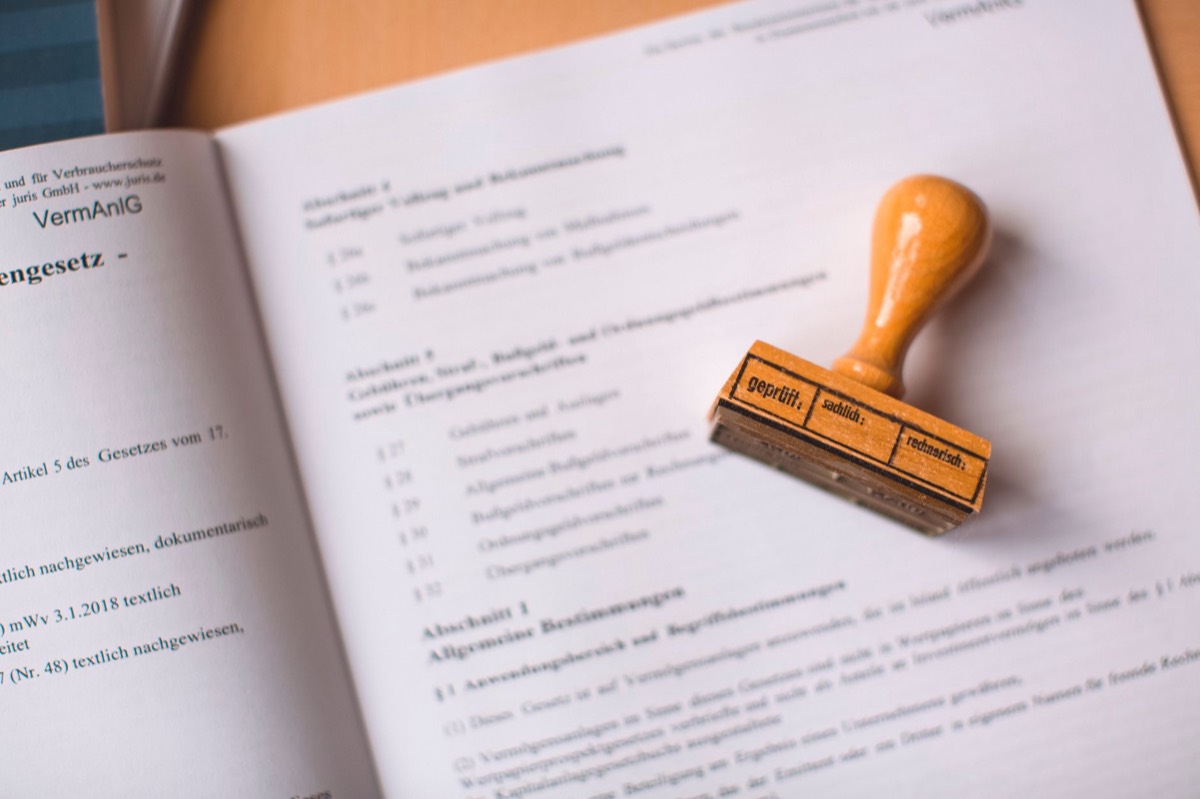
A certified translation is different: a signed statement of accuracy attached to one specific document, usually required by an immigration office, court, or university for something like a birth certificate or diploma. A company can be ISO-certified and still produce document certifications that get rejected somewhere for formatting reasons, and a company with no ISO certification at all can still issue a fully valid certified translation, because document certification is a legal declaration, not a quality-management credential. They answer different questions on a form nobody explains clearly. We handle both, process certification and per-document certified translation, and they show up as separate lines on how a job gets built rather than one thing standing in for the other. See certified vs. sworn translation for the document-level distinction in full.
What to ask a vendor, and what should worry you
The honest questions are short. Are you ISO 17100 compliant, and can I see evidence of it? Who revises translated text: a second independent linguist, or the same translator re-reading their own work the next morning? What's your error threshold, and what happens when a delivered file exceeds it? For machine-translation-assisted work, is this light or full post-editing?
A studio that answers with specifics, a revision workflow you can picture, a named second reviewer, a real threshold number, is one worth trusting with something that matters. That's the same structural pattern covered in what makes a translation studio reliable: the standards in this post are what that reliability looks like once it's written down and audited by someone outside the company.
Answers that should worry you: a flat "we guarantee 100% accuracy" with no process behind the claim, "our translators are all native speakers" offered as if that alone settles the revision question, or silence when you ask who checks the checker. None of these standards make a translation good on their own. A translator still has to be genuinely skilled at the job. But they're the difference between a vendor claiming quality and a vendor able to demonstrate it on request. If you want that process applied to your own document, get an instant quote and put the same three questions to us before you pay.
S M Arifuzzaman
Founder, TranslationAtlas
S M Arifuzzaman founded TranslationAtlas and built its certified-translation fulfillment process and professional translator network, which now covers 120+ languages. He oversees quality and turnaround across every order the platform processes.
Artículos relacionados
Finding Professional Translators in Niche Genres
Patent claims, gaming lore, poetry, theology: niche translation needs a specialist, not a generalist. Where to find one and how to vet them before you pay.
Certified Translation for USCIS
USCIS wants a complete, certified translation with a signed accuracy statement, not a notary stamp. Here's exactly what to submit and how to order it.
Certified Translation in Germany: A Guide
German authorities want a stamp from a court-vetted translator, not a self-signed accuracy statement. Here's how beglaubigte Übersetzung actually works.
Immigration Certified Translation 2026
Navigating immigration translation requirements in 2026. Learn exactly what makes a translation certified and how to avoid delays.