Common Translation Mistakes to Watch For
Publicado el 4 de agosto de 2026 · 6 min de lectura
S M Arifuzzaman · Founder, TranslationAtlas
The most common translation mistakes fall into a handful of repeating categories: false friends, number and date format slips, unconverted units, terminology drift, and formatting loss. Most are catchable by a careful reader even without the source language, and knowing which ones are cosmetic versus which ones can get an official document rejected changes how hard you look for each.
Every translator makes some of these at some point; the difference between a good translation and a bad one is whether a second set of eyes catches them before the document goes out. Here's what actually shows up, in roughly the order we see it during review.
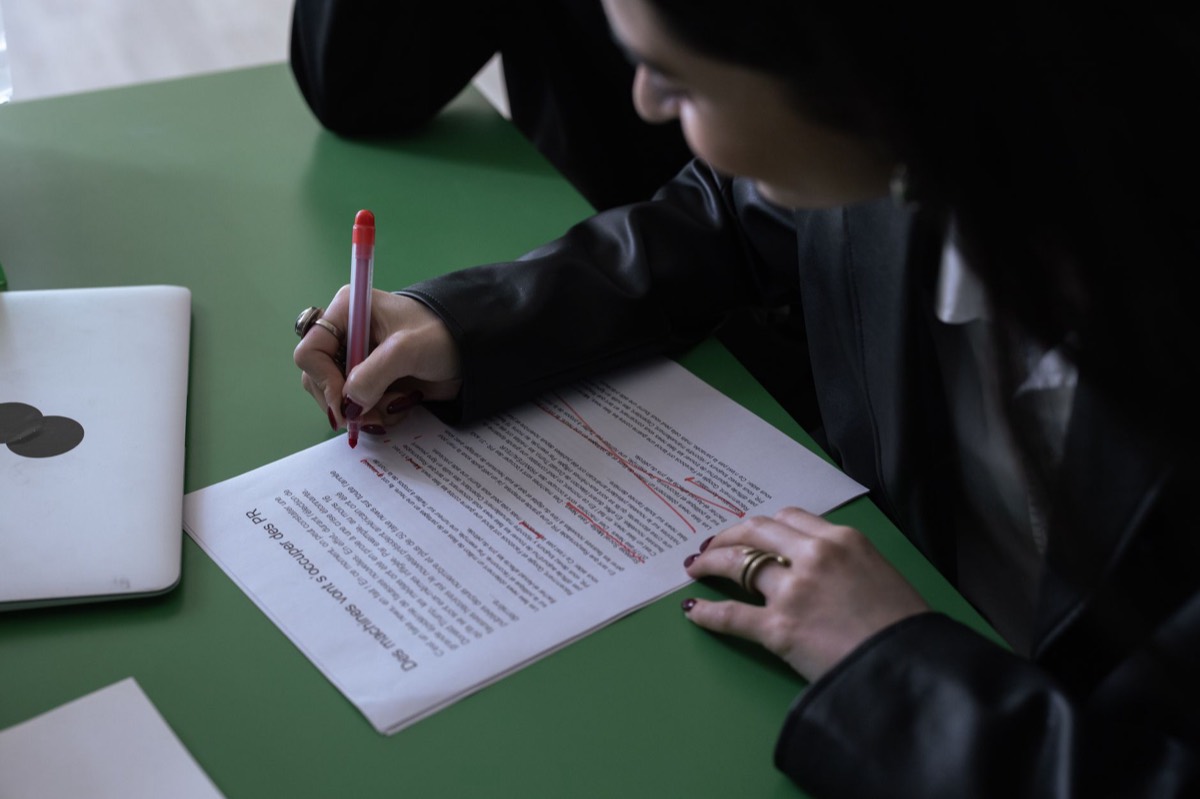
False friends
A false friend is a word that looks like a cognate but means something else entirely, and it's the single most common translation mistake we catch in review. Spanish "embarazada" isn't "embarrassed," it's "pregnant." French "actuel" doesn't mean "actual," it means "current." German "Gift" isn't a present, it's poison. Each of these produces a sentence that reads smoothly and confidently, which is exactly the problem. A translator who doesn't already know the trap won't pause on it, and neither will a proofreader who's skimming for fluency instead of checking meaning word by word. False friends cluster in near-cognate language pairs (Spanish-English, French-English, German-English) precisely because the surface similarity lulls people into trusting their first instinct.
Number and date format slips
This one is invisible until it isn't. A comma and a period mean opposite things depending on the locale: 1,000 is one thousand in English but one point zero in much of continental Europe, where 1.000 is the thousand. Dates are worse. 04/07/2026 reads as April 7th to an American and July 4th to almost everyone else, and neither format is wrong, they're just incompatible without a conversion step. We've seen a shipped contract with a payment deadline that shifted by three months purely because a date format carried over unconverted from the source. On official documents this isn't a style nit, it's the kind of error that gets a filing bounced back for correction, and it's one of the things how professional translators verify accuracy is specifically built to catch through QA software that flags mismatched numbers between source and target.
Unconverted units
Metric and imperial don't just need translating, they need converting, and a lot of translations skip that step entirely, leaving 180 cm or 75 kg sitting untouched in an English document where the reader expects feet and pounds. Sometimes that's a deliberate choice (technical and legal documents often keep source units on purpose, with a converted figure added in brackets), but when it's an oversight rather than a decision, it reads as unfinished. The same issue shows up with currency: a price left in euros inside an otherwise fully localized English marketing page tells the reader nobody checked the final draft.
Negation flips
Small words carry enormous weight, and negation is the smallest word with the biggest consequence. "The tenant is not liable for structural repairs" and "the tenant is liable for structural repairs" differ by exactly one word, and a rushed or fatigued translator can drop or add a "not" without noticing, especially in long sentences with multiple clauses and a negation buried in the middle. This is rare compared to the other mistakes on this list, but it's the one with the highest stakes: a flipped negation in a contract clause or a medical dosage instruction isn't a stylistic issue, it's a liability.
Terminology drift within one document
A contract that calls the same party "the Lessor" in paragraph one and "the Owner" in paragraph four hasn't introduced stylistic variety, it's created ambiguity that a lawyer will flag on sight. Terminology drift happens most often on longer documents split across multiple translators, or on any document translated in more than one sitting without a glossary locked down first. It's also one of the easiest mistakes for a reader without the source language to catch: pick two or three recurring terms (a product name, a job title, a legal party) and confirm they're rendered identically everywhere they appear. If they aren't, the document probably wasn't reconciled at the end, and that's worth flagging before you rely on it. This connects directly to how translators handle names and proper nouns: the same discipline that keeps a name spelled consistently is what keeps a defined term consistent too.
Untranslated leftovers
A sentence or a stray phrase left in the source language, usually near a page break or inside a table, is the clearest sign that a document was translated in a rush or assembled from multiple passes without a final read-through. It's harmless when it's a single caption, but it's a red flag about the process behind the whole document: if this got missed, what else did?
Formatting loss in tables and stamps
Tables, stamps, and marginal notes are where formatting damage concentrates, because they don't flow like prose and get mangled easily when a document is converted, reflowed, or handled by a tool that wasn't built for the source format. A table column that shifts by one row, a stamp that gets summarized instead of transcribed, a signature block that disappears entirely: none of these are translation errors in the strict sense, but they're exactly the kind of thing an authority checks for on an official filing, where every stamp and marginal note is expected to appear, translated or bracketed, not silently dropped.
Which mistakes are cosmetic, and which are filing-killers
Not every error carries the same weight. A slightly awkward sentence rhythm or an unconverted unit in a casual document is cosmetic: it reads a little off, but nobody rejects anything over it. Number and date format slips, dropped negations, and missing stamps or marginal notes on an official document are a different category entirely: these are exactly what gets a certified translation bounced back by an immigration office, a court, or a university admissions committee, because the reviewer isn't grading fluency, they're checking whether the document matches the original fact for fact. If you want the full picture of how professionals catch this class of error before it ever reaches a reader, our post on how professional translators verify accuracy walks through the QA stack (second-linguist revision, terminology checks, number and tag verification) built specifically to close this gap. And if you've already spotted one of these mistakes in a translation you received, how to tell if a translation is good quality has the fuller checklist for what to look at next.
If you'd rather not comb through a document yourself, get an instant quote and our project managers will run the full QA pass before it ever reaches you.
S M Arifuzzaman
Founder, TranslationAtlas
S M Arifuzzaman founded TranslationAtlas and built its certified-translation fulfillment process and professional translator network, which now covers 120+ languages. He oversees quality and turnaround across every order the platform processes.
Artículos relacionados
Translation Philosophies: Literal vs. Free Explained
Word-for-word or sense-for-sense, domesticate or foreignize: the theories that shape how a translator decides what to keep and what to change.
Translation Quality Standards and Benchmarks
ISO 17100, ISO 18587, and MQM error scoring explained plainly: the real translation quality standards you can ask a vendor about before you sign.
Finding Professional Translators in Niche Genres
Patent claims, gaming lore, poetry, theology: niche translation needs a specialist, not a generalist. Where to find one and how to vet them before you pay.
How to Tell If a Translation Is Good Quality
You don't need to speak both languages to judge translation quality. Here are the checks professionals use, adapted for a reader who only reads one side.