How Professional Translators Verify Accuracy
2026年8月4日公開 · 読了時間7分
S M Arifuzzaman · Founder, TranslationAtlas
Professional translators verify translation accuracy through a layered process: a first translation, a full edit by a second linguist, a proofread, and automated checks for numbers, dates, and formatting before anything ships. No single person's read-through catches everything on its own. Accuracy is a product of the workflow built around the translator, not a talent one person either has or doesn't.
If you've ever wondered what actually happens between "translator finishes the file" and "client receives the document," the honest answer is that a lot more happens than most people assume. A good agency doesn't ship a first draft and call it done. Here's the stack that catches errors before you ever see them, and why each layer exists.
What is the TEP process?
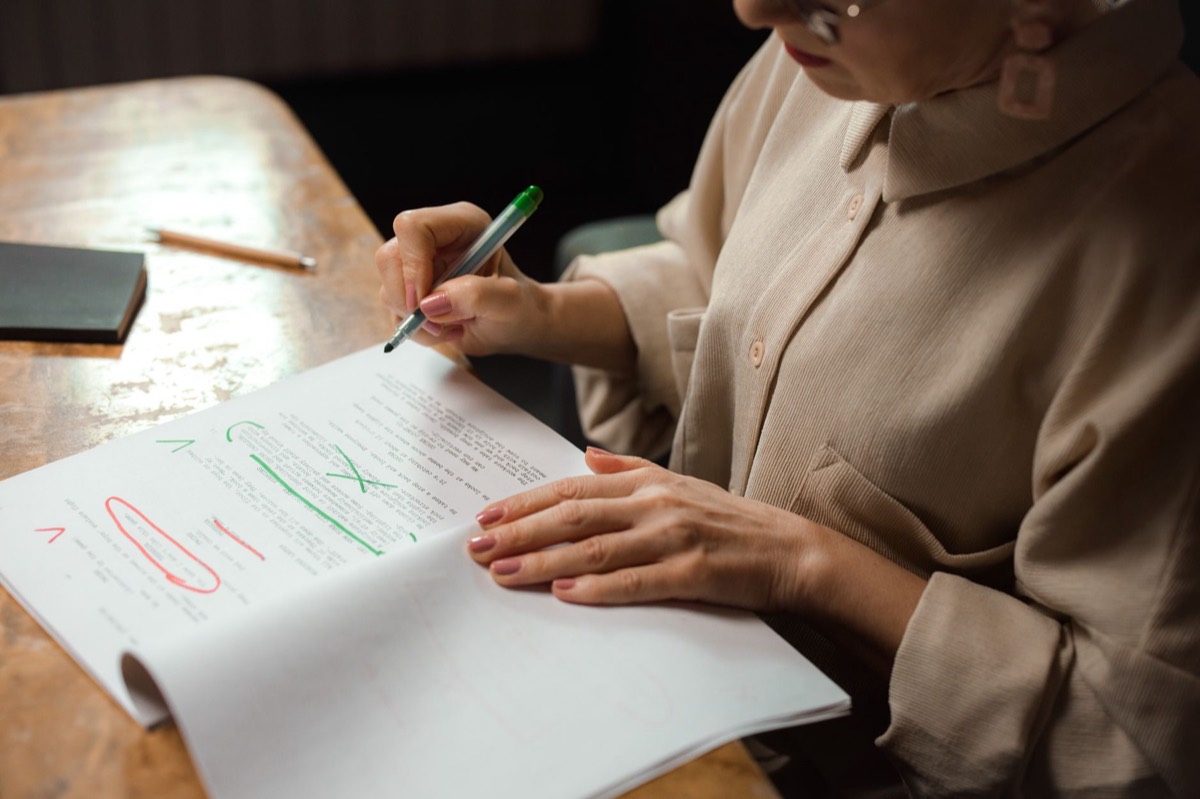
TEP stands for translate, edit, proofread, and it's the backbone of professional translation accuracy. The translator produces the first full draft, working from the source document at whatever pace the material demands: fast for a repetitive contract clause, slower for a passage with real ambiguity. A second linguist, independent from the first, then edits against the source line by line, checking meaning, terminology, register, and anything dropped or added along the way. A proofreader does a final pass focused on the target text alone, reading for whether it sounds natural, whether typos slipped through, and whether formatting still matches the source layout.
The edit stage is where most substantive corrections happen. A translator working alone for eight hours on a technical manual will miss things: a mistranslated unit of measurement, a term rendered two different ways in the same document, a sentence that reads fine in isolation but quietly contradicts a definition three pages earlier. A second linguist reading the file cold, without the fatigue of having produced it, catches what the original translator has stopped seeing. This is also why rush jobs that skip the edit stage entirely are a known risk. Speed comes from cutting the review layer, and that's exactly the layer doing most of the accuracy work.
Why does a second linguist review every file?
This isn't a nicety added only for premium orders. ISO 17100, the international standard for translation services, requires independent revision by a second qualified translator as a baseline condition of a compliant process, not as an optional upsell. If an agency skips this step to save time or cost, what you're actually getting is a single person's opinion, however skilled that person is, with nobody checking their work.
The second linguist works from the source document, not just the translated one, and that distinction matters more than it sounds. Someone proofreading only the English output can confirm the text reads smoothly, but they can't catch a name transposed, a negative accidentally dropped, or a number transcribed wrong, because none of those errors necessarily break the flow of the sentence. Real accuracy checking means comparing target against source, sentence by sentence, every time. That discipline is how we catch the errors a fluent-sounding but factually wrong sentence would otherwise sail through undetected.
How do termbases and translation memory catch inconsistency?
Long or recurring documents carry a specific risk: contracts, product manuals, and medical records for a returning patient can all end up with the same term translated three different ways across one file, or across documents delivered months apart. A termbase, an approved glossary of client- and industry-specific terms, and a translation memory, a database of previously translated segments, both feed into the translator's working environment and flag when a term doesn't match what was used before.
For a returning client, this consistency compounds over time. If your company's product name, your industry's regulatory terminology, or your family's surname spelling were already fixed in a prior project, that decision carries forward automatically on the next one instead of relying on a translator to remember or re-research it from scratch. It's a small mechanism with an outsized effect on how a multi-document project reads as a coherent whole, rather than as several separate jobs stitched together.
What do QA tools check that people miss?
Humans are genuinely bad at spotting certain error types under time pressure, particularly numbers, dates, and formatting tags. QA software, tools like Xbench or the automated checks built into professional CAT platforms, runs a pass looking specifically for numeric mismatches between source and target, dates converted incorrectly (day and month order swaps are common between US and European formats), missing or duplicated punctuation, and formatting tags that got dropped or misplaced somewhere during translation.
None of this replaces human judgment on meaning or tone. What it catches is the boring, high-consequence stuff a tired proofreader on their fourth document of the day might read straight past: a "15" that should have been "51," a percentage sign that quietly vanished between drafts, a date field that flipped from March to May. On a financial statement or a dosage instruction, that class of small transcription error is precisely the one that causes real harm, which is why it gets a dedicated automated pass rather than being left to a final read-through alone.

When does back-translation get used?
Back-translation, translating the finished target text back into the source language by an independent translator and then comparing it against the original, is a heavier step reserved for high-stakes content: clinical trial consent forms, drug labeling, informed-consent documents, and some regulatory filings. It's slow and roughly doubles the linguistic cost of a project, so it doesn't get used by default on ordinary documents.
Where it earns its cost is anywhere a misunderstood instruction has direct consequences for someone's health or legal standing. A back-translation that comes back meaningfully different from the original source flags exactly where the first translation drifted, before a patient or a regulator ever sees the final version. For most documents this step would be overkill; for that narrow subset, it's the only reliable way to be sure nothing shifted in meaning along the way.
Do these checks work the same way for every language pair?
Not entirely. The mechanics stay consistent, but the risk profile shifts. A pair with a large shared vocabulary and similar sentence structure, like English and Spanish, tends to surface fewer structural ambiguities for an editor to catch. A pair with real structural distance, or a document moving into a language with honorifics, gendered terms, or a different date convention entirely, needs the edit stage to spend more time on choices that don't have a single obvious answer. The QA software checks stay the same either way; the editorial judgment calls simply take longer on harder pairs.
What does "certified" add beyond accuracy?
Accuracy and certification aren't the same thing, and it's worth being precise about the difference. A certified translation is a translation delivered with a signed statement attesting that it's complete and accurate. It functions as a paper trail an official body can rely on, not as a separate quality tier layered on top of a lesser one. You can read more on how to tell if a translation is good quality if you're evaluating a document you already have in hand.
Some countries go further and require a sworn translator, a distinct legal status with its own registration and stamp requirements. Our guide on certified vs. sworn translation breaks down when each applies and where the two get confused. Either way, the accuracy work described above happens underneath the certification, not instead of it: the TEP process, the second-linguist revision, and the QA pass all take place before a certification statement is ever attached.
If you want to see how a project actually moves through this process end to end, how it works walks through each stage from upload to delivery. And if you have a document ready now, you can get an instant quote and see the fixed price before you commit to anything.
S M Arifuzzaman
Founder, TranslationAtlas
S M Arifuzzaman founded TranslationAtlas and built its certified-translation fulfillment process and professional translator network, which now covers 120+ languages. He oversees quality and turnaround across every order the platform processes.
関連記事
How Translators Handle Names and Proper Nouns
Translating names means matching the exact passport spelling on official documents, choosing the right transliteration system, and knowing what stays as-is.
What to Know Before Commissioning a Translation
A practical checklist for commissioning a translation: which files to send, what to state up front, and the questions a good agency will ask you first.
How Translators Preserve Voice and Style
Voice and style in translation means matching register, rhythm, and sentence patterns, not just meaning. Here's how professional translators do it.
Why Translations of the Same Book Read Differently
Two translators working from the same original text can produce two very different books. Here's why that happens and how to pick the version worth reading.